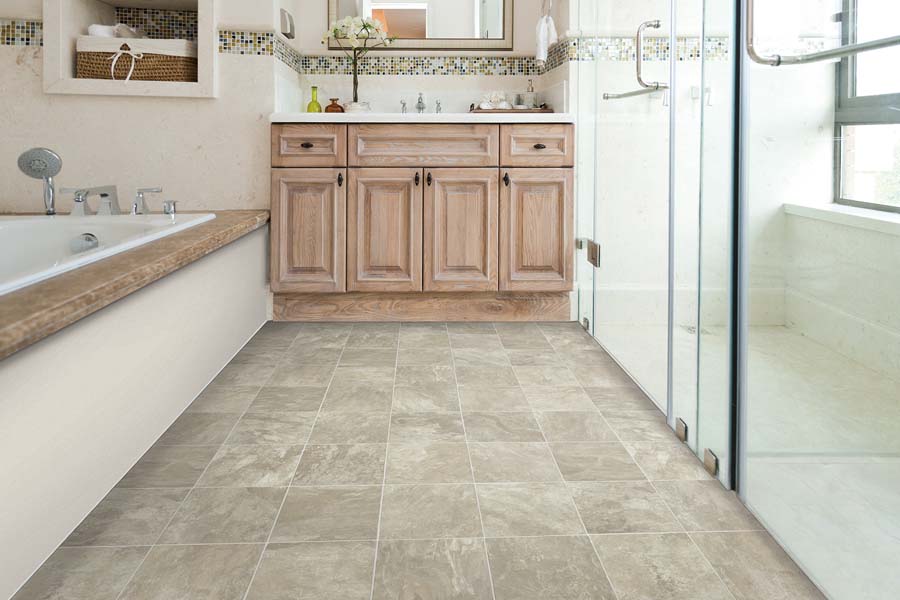
About Vinyl: Vinyl Flooring for Wilmington Homes
Vinyl is the floor we steer people to for the rooms that take the most water, sand and wear: kitchens, bathrooms, laundry rooms, mudrooms and rentals. Ours comes in wide rolls, so most rooms end up with one seam or none, and a spill sits on top until you wipe it up. It’s one of the most affordable floors you can put down, and today’s wood, stone and tile designs look far more natural than the vinyl you may remember from an older kitchen.
Our vinyl selection comes from Armstrong Flooring, Congoleum, Mohawk and AHF Contract, and a free estimate lays out your options, the preparation your rooms need and the installation timeline.
What kinds of vinyl can you choose from?
Choosing vinyl comes down to four things: the look, how soft it feels, how it’s held to the floor and how hard it’s built to work.
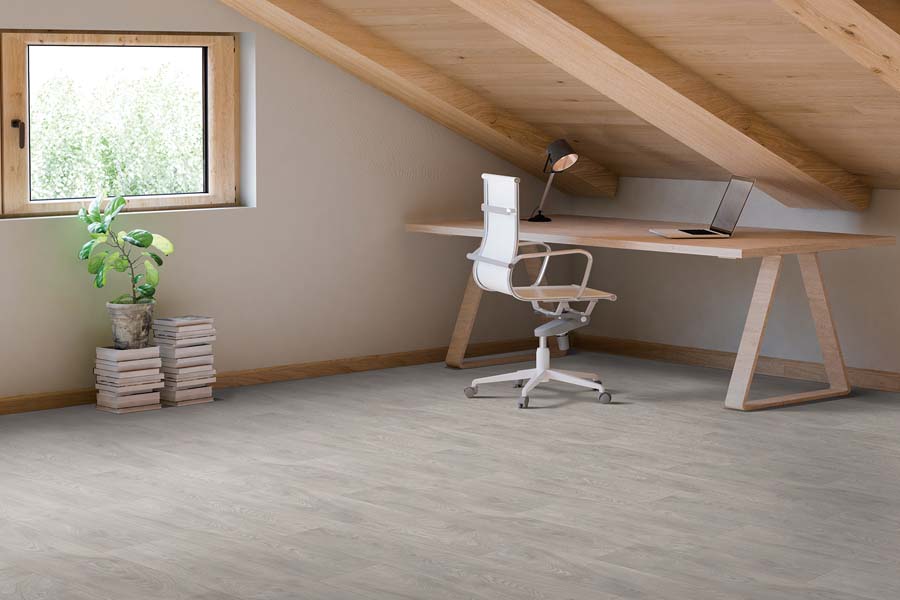
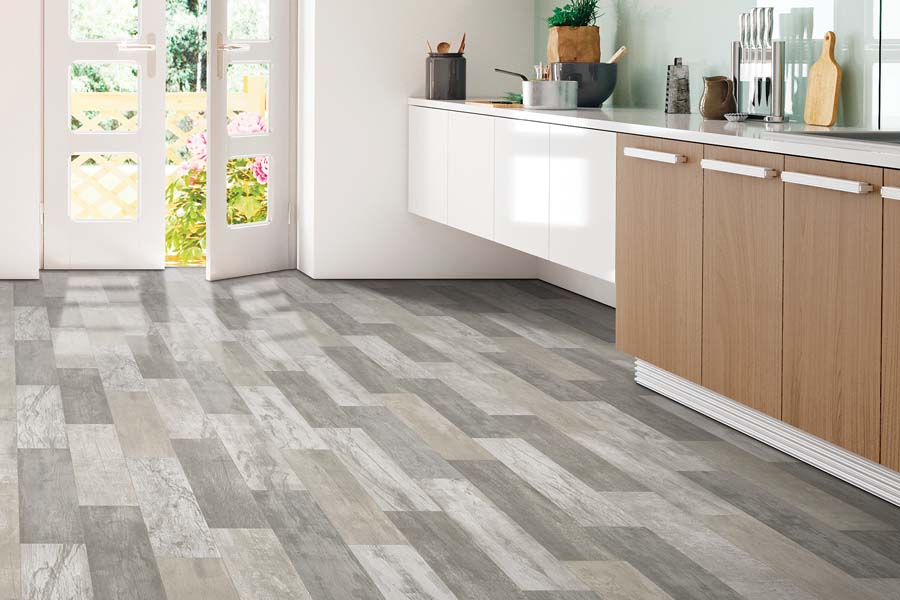
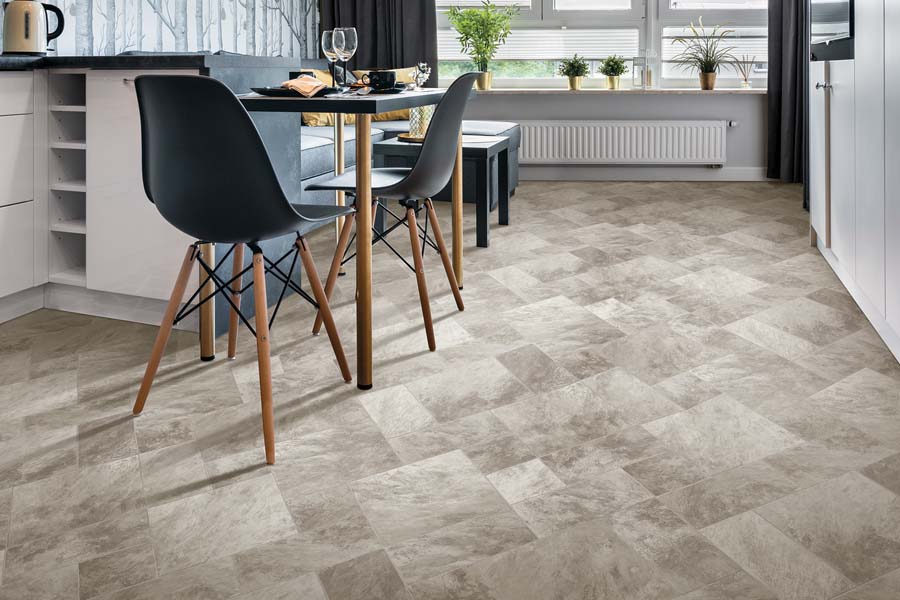
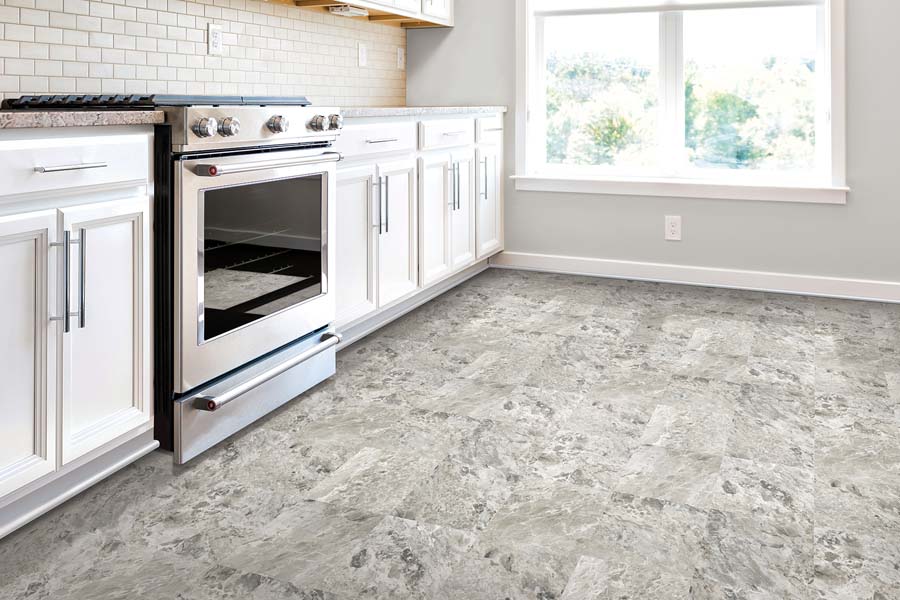
Vinyl comes in wood, stone and tile designs as well as simpler patterns, printed under a clear top layer. The better ones have texture that follows the printed grain or grout lines, so a wood or stone look feels right underfoot too. In an older ranch home, a quiet stone or tile pattern can freshen the kitchen and hallway without clashing with the cabinets and paint around it. An oversized checkerboard or a tiny, busy print usually works against a room like that.
Cushioned vinyl has a foam layer that makes it softer and warmer to stand on and quieter to walk across, which you’ll appreciate at the kitchen sink and in a room above a bedroom. Vinyl without the cushion is firmer, and it holds up better under heavy furniture and rolling chairs.
How the vinyl is held down matters as much as how it looks. Some is glued across the whole floor, which is what we want in a bathroom or anywhere water could find an edge. Some lies flat with adhesive only at the edges and seams; it goes in faster and comes up more easily the next time the floor is replaced, which is handy in a rental.
The clear wear layer on top takes the traffic, and a thicker one lasts longer. A busy kitchen, a mudroom or a rental is worth the step up, while a powder room or a guest bath can do with less. For offices, shops and other spaces with heavy foot traffic, we also carry commercial vinyl built for that kind of wear.
Request a free estimate
Where does vinyl work best in a Wilmington-area home?
Vinyl earns its place in the rooms where water, sand and traffic are part of every day:
- Kitchens: one piece can run from the cabinets to the table with few seams or none, and cushioned vinyl is easy on your feet at the sink and stove. Walk the refrigerator or range across a sheet of plywood when it moves, because a dragged appliance can tear a new floor.
- Bathrooms: a glued-down floor with no seams around the tub and toilet leaves water nowhere to get in. Vinyl can be slippery when it’s wet, so keep a non-staining bath mat by the tub.
- Laundry rooms and mudrooms: a leaking washer or a pile of wet beach towels stays on the surface instead of soaking into a seam.
- Rentals and beach houses: vinyl suits rental properties because it’s affordable, stands up to tenants and has few seams for an overflowing tub to get through. In a house that sits empty between stays, keep the air conditioning and heat running, because vinyl does best in a home that’s climate-controlled all year.
- Slabs and basements: vinyl rated for it can go right on a concrete slab or a basement floor as long as the concrete is dry enough, and we test the moisture before we install.
Sand wears on every floor near the beach, and vinyl holds up to sand and everyday spills because it goes down in large pieces with few seams for grit and moisture to work into, while its wear layer takes the scuffing instead of the design underneath. Floodwater is a different story. When water gets under vinyl, especially over a wood subfloor, the vinyl has to come up so the subfloor can dry.
Vinyl isn’t the answer for every room. A staircase needs a finished edge on every step, so for stairs we’d point you to carpet or hardwood stair treads, both of which we install. An unheated porch or sunroom is hard on vinyl. And in a living room where you want the look of real wood boards, luxury vinyl plank or hardwood will suit you better.
Which vinyl brands do we carry?
We carry vinyl from Armstrong Flooring, Congoleum and Mohawk Flooring for homes, and commercial vinyl from AHF Contract for offices and shops. Samples ship free, so you can see a color in your own light before you choose it.
How does vinyl flooring installation work with us?
We sell and install vinyl, and every job runs from a free estimate to an inspection of the finished floor.
Start with samples, or try a style in a photo of your own room. One of our project specialists can help you narrow it down and weigh vinyl against the other floors we carry, and your quote spells out the material options, the preparation each room needs and the installation timeline.
Our installers follow the manufacturer’s installation requirements and CFI standards. Moisture testing and subfloor preparation come first, because vinyl shows every bump and seam in the floor underneath, and the job finishes with the trim and a post-installation inspection. Professional installation also keeps the maker’s warranty on your floor valid if something ever goes wrong with the material.
What sets the price of a vinyl floor?
The size and shape of your rooms, what comes up first, the subfloor underneath and the vinyl you choose set the price.
Our vinyl comes in rolls of set widths, so a room wider than the roll needs a seam, and an odd-shaped room can mean buying more vinyl than the room measures. An old floor that has to come up, a subfloor that needs leveling, and trim and transitions at doorways and walls each add to the job. A thicker wear layer costs more and lasts longer, and cushioned vinyl costs more than a firm one.
Your free estimate puts a number on your rooms with the options side by side, and financing is available if you’d rather spread the cost.
How do you keep a vinyl floor looking new?
Keep grit off it and don’t let water sit, and vinyl needs very little else.
Sweep or vacuum often, because tracked-in sand scratches the wear layer, then damp-mop with a cleaner made for vinyl. Skip the steam mop, since the heat and moisture can damage the floor.
Choose door mats labeled non-staining, because a rubber backing can leave a permanent yellow stain on vinyl. Put wide felt or plastic protectors under chair and table legs, and draw the blinds against strong afternoon sun, which fades any floor over time.
Hold on to a leftover piece from your installation. If something sharp ever cuts the floor, a patch from the same roll can be fitted so closely that the repair is hard to find.

How do you get started?
Order a few samples, try your favorites in a photo of your own room, and when you’re ready for options and a price on your rooms, request a free estimate.
Request a free estimateFeatured Vinyl
Questions customers ask about vinyl
Yes, on the surface. Water can’t soak through vinyl, and a glued-down floor with few seams keeps spills on top until you wipe them up. Water that gets underneath from a leak or a flood is another matter, and the floor usually has to come up so the subfloor can dry.
No. Our vinyl comes in wide rolls and goes down in one piece, while luxury vinyl comes as planks and tiles that click together or glue down and looks more like real wood or stone. For most living areas luxury vinyl plank is the better floor, and vinyl wins laundry rooms, small baths and tight budgets.
No. Linoleum is made from natural materials such as linseed oil, cork and wood flour, while vinyl is made from PVC. People often call any floor that comes on a roll linoleum, which is where the mix-up starts.
A vinyl floor lasts many years when it goes down over a flat, sound subfloor and gets basic care. A thicker wear layer lasts longer, and grit, dragged furniture, rubber-backed mats and strong sun are what wear any vinyl out early.
Sometimes. New vinyl can go over a single layer of old flooring that’s smooth, dry and firmly stuck down, but not over cushioned vinyl, a loose or floating floor, or carpet. Your quote spells out the preparation each room needs.
It can, if it went down decades ago. Older vinyl floors sometimes have asbestos in the backing or the adhesive, so don’t sand, scrape or pull up a floor like that yourself. Have it tested before any work starts, because the safe way to handle it depends on what the test finds.
Yes. Our installers work throughout New Hanover, Brunswick and Pender counties, from Wrightsville Beach, Carolina Beach and Kure Beach to Leland, Hampstead, Porters Neck, Burgaw, Surf City and Topsail Beach. We also install vinyl flooring in Southport.
Reimagine your space
Get inspired with our beautiful flooring galleries