

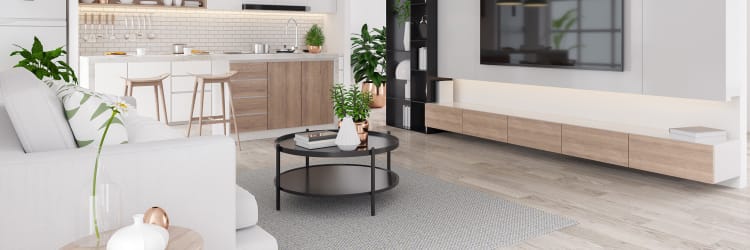
A quality luxury vinyl floor lasts 10 to 30+ years in your home — and the spread between those two numbers comes down to three things you can check on the sample before you buy: the wear layer, the core, and how the floor gets installed. We've been selling and installing LVP and LVT across the Wilmington area since 1999, and we've walked on our own installations from two decades back that still look right. We've also torn out five-year-old bargain vinyl that never had a chance.
Here's the honest version of what decides your floor's lifespan, spec by spec, so you can read any sample board like someone who installs them for a living.
The Quick Answer, by Wear Layer
If you remember one spec from this page, make it this one. The wear layer is the clear protective coating on top of the plank, measured in mils — thousandths of an inch (not millimeters). It's the part of the floor that takes every footstep, paw, and grain of sand, and its thickness predicts lifespan better than any other number on the box:
6–8 mil: Builder and bargain grade. Expect 5 to 10 years in real use — fine for a guest room, undersized for a hallway. This tier is where most "vinyl wore out fast" stories come from.
12 mil: Solid residential duty. Around 10 to 15 years in an average household, longer in quiet rooms.
20 mil: The sweet spot we recommend for most coastal homes — 15 to 25 years of family life, dogs included. This tier carries light-commercial ratings, which tells you what it can absorb.
28 mil and up: True commercial armor. In a home, this floor will likely outlast your taste in colors — 25 to 30+ years.
Those ranges assume a floor that was installed correctly and swept regularly. Skip either of those and the best wear layer on the market can't save you — more on both below.
What Is the Wear Layer on LVP, Exactly?
It's a transparent sheet of tough vinyl bonded over the printed design layer, finished with a urethane coating that does the daily work of resisting scuffs and stains. Premium lines strengthen that coating with ceramic beads or aluminum oxide — the same hardening idea used on factory-finished hardwood — which is why two floors with identical mil counts can still wear differently.
Two details worth checking on any spec sheet:
The mil number describes the clear layer only, never the whole plank. A thick 8 mm plank with a 6 mil wear layer is a soft floor in a bulky body. Total thickness affects feel; the wear layer decides lifespan.
The coating type matters at the same mil count. Ask what's in the finish — enhanced urethane systems keep their sheen years longer under sandy coastal traffic, and we can show you the difference between samples on our showroom wall.
How Long Does 20 Mil Vinyl Plank Last?
Since so many of you ask about this tier specifically: a 20 mil LVP floor in a typical household should give you 15 to 25 years, with the top of that range going to homes that control sand at the door and clean with vinyl-safe products.
The 20 mil tier earns its reputation in hard-use settings. It's the standard spec for rental units and multifamily properties because it survives tenant turnover — and if it can handle a decade of move-ins, move-outs, and security-deposit disputes, it can handle your kitchen. If you own rentals anywhere from Carolina Beach to Topsail, 20 mil is the floor that stops the replace-every-turnover cycle; commercial-rated 28 mil is worth the upgrade only in truly punishing units.
LVT Flooring Layers: What's Inside Every Plank and Tile
Luxury vinyl plank (LVP) and luxury vinyl tile (LVT) share the same four-layer construction — plank mimics wood, tile mimics stone and ceramic. From top to bottom:
Wear layer: The clear armor covered above. Lifespan lives here.
Design layer: A high-resolution print of wood grain or stone. Today's versions fool people at standing height; texture pressed to match the image (embossed-in-register) fools them kneeling.
Core: The waterproof body of the plank — the layer that decides how it handles moisture, dents, and imperfect subfloors.
Backing: The stabilizing bottom layer, often with attached underlayment pad that softens sound and speeds installation.
The core is where products split into two camps, and the difference shows up underfoot for decades.
SPC vs. WPC: Which Core Lasts Longer?
SPC (stone-plastic composite) is a dense, rigid core of limestone dust and vinyl. It's the harder of the two to dent — chair legs, dropped pans, dog claws — and its stiffness bridges small subfloor flaws. Dense also means firmer underfoot and a bit more sound transfer. In lifespan terms, SPC flooring lasts as long as its wear layer allows: expect the same 15 to 25 years from a 20 mil SPC floor, with exceptional dent resistance the whole way.
WPC (wood-plastic composite) uses a foamed core — thicker, warmer, quieter, and more forgiving to stand on for long stretches. It gives up a little dent resistance in exchange. Bedrooms and upstairs rooms love it; commercial kitchens don't.
Both cores are waterproof — neither absorbs water, which is the whole reason vinyl owns coastal kitchens. You'll also see the marketing term EVP (engineered vinyl plank), which simply means rigid-core LVP of either type; it's a naming difference, and the spec sheet still tells the real story. Rigid cores are the backbone of lines like COREtec, the brand that invented the category, and you can compare core types side by side across our full luxury vinyl collection.
One clarification while we're defining terms: luxury vinyl and traditional sheet vinyl are different products with different lifespans and price points. Sheet vinyl runs 10 to 20 years as a flexible, seamless roll; our comparison of sheet vinyl vs. luxury vinyl plank sorts out which belongs where.
What Actually Wears Out a Vinyl Floor
Knowing the enemy list helps you beat every item on it. After decades of installing — and replacing — vinyl floors on this coast, here's what we see end them, in order:
Grit. Sand from Wrightsville Beach or the Intracoastal is fine abrasive, and it grinds under every footstep. It's the quiet killer of glossy floors — matte and textured finishes hide its work far longer.
Sun. UV through big south-facing windows and sliders fades design layers unevenly over years. Better lines carry UV-resistant coatings; sheer curtains and an occasional rug shuffle do the rest.
Furniture without pads. Point loads dent cores and grind finish. Felt pads cost pennies; refrigerator rollers and plywood paths on moving day cost nothing but memory.
Moisture from below. The plank is waterproof; your slab's vapor drive is another matter. Trapped moisture under a floating floor grows problems the plank itself never causes — our guide to subfloor moisture before installation explains the tests that prevent it.
Wrong cleaners. Wax builds haze, abrasives dull finish, and steam mops force vapor into seams. A vinyl-safe cleaner and a damp mop are the entire required toolkit.
Cheap rug pads. Bargain PVC waffle pads can react with vinyl finishes over months and print a permanent dull shadow. Use pads labeled safe for luxury vinyl — we stock them.
Installation Method and Lifespan: Glue-Down, Floating, or Loose Lay
Luxury vinyl installs three ways, and matching the method to the room is part of how a floor reaches the far end of its range:
Floating (click-lock): Planks lock to each other and rest over the subfloor — the standard for most homes, fast and forgiving. It needs a flat subfloor and expansion room at the walls; big temperature-swing rooms like sunrooms deserve extra planning.
Glue-down: Bonded fully to the subfloor. Dead-solid underfoot, best for large open runs, rolling loads, and commercial spaces — and single planks can be replaced without disturbing the field.
Loose lay: Friction-backed planks that butt together without glue or click joints — a semi-permanent floor you can lift and reuse, useful in rentals and temporary spaces.
Whichever method your product calls for, the lifespan math is the same: the floor lasts as long as its preparation was honest. Moisture testing over concrete, leveling, correct expansion gaps, and manufacturer-spec underlayment come standard with our professional installation — and they're also what keeps the warranty on your floor enforceable, since improper installation quietly voids most of them.
A 60-Second Showroom Checklist for a Floor That Lasts
Bring this list to any flooring store, ours included, and you'll shop above the marketing:
Wear layer: 20 mil for main living areas, pets, and rentals; 12 mil where traffic is light.
Core: SPC for dent resistance and slabs; WPC for warmth and quiet upstairs.
Finish: Enhanced urethane, in matte or low-gloss for sandy households.
Texture: Embossed-in-register looks real longer and hides fine wear.
Warranty terms: Read past the headline number — wear-through coverage, water conditions, and installation requirements are where "lifetime" gets defined.
If dogs and kids are your main durability test, our guide to pet-friendly vinyl and laminate floors goes deeper on finishes and colors that hide the evidence.
The Care Routine That Adds Ten Years
Vinyl asks very little, and the little it asks pays back in years:
Mats at every exterior door — the sand you stop at the threshold never grinds the finish.
Sweep or vacuum traffic paths weekly, damp-mop with a vinyl-safe cleaner, and skip steam entirely.
Felt pads under everything with legs, and lift rather than drag on furniture-moving days.
Keep a spare box of planks from your installation, stored flat and dry. A damaged plank swaps out; a matching spare from your original run beats hunting a discontinued style in year twelve.
Built for This Coast, Backed by This Store
Humidity, storm season, sandy feet, and rental turnover are exactly the conditions luxury vinyl was engineered to shrug off — one reason it's the most-installed hard surface from Kure Beach and Carolina Beach up through Wrightsville Beach, Leland, Hampstead, Southport, Burgaw, and Topsail Beach. Our Luxury Vinyl 101 resource center collects short answers to the questions this page raises, and every style in the catalog ships free samples to your door.
When you're ready to put real numbers on a real floor, request your free in-home estimate or call (910) 362-9700 — or come stand on the difference between 12 and 20 mil yourself at our Wilmington showroom, 710 S 17th Street. We'll match the spec to how your household actually lives, install it to spec, and set your floor up to reach the long end of that 10-to-30-year answer. No gimmicks, since 1999.


