

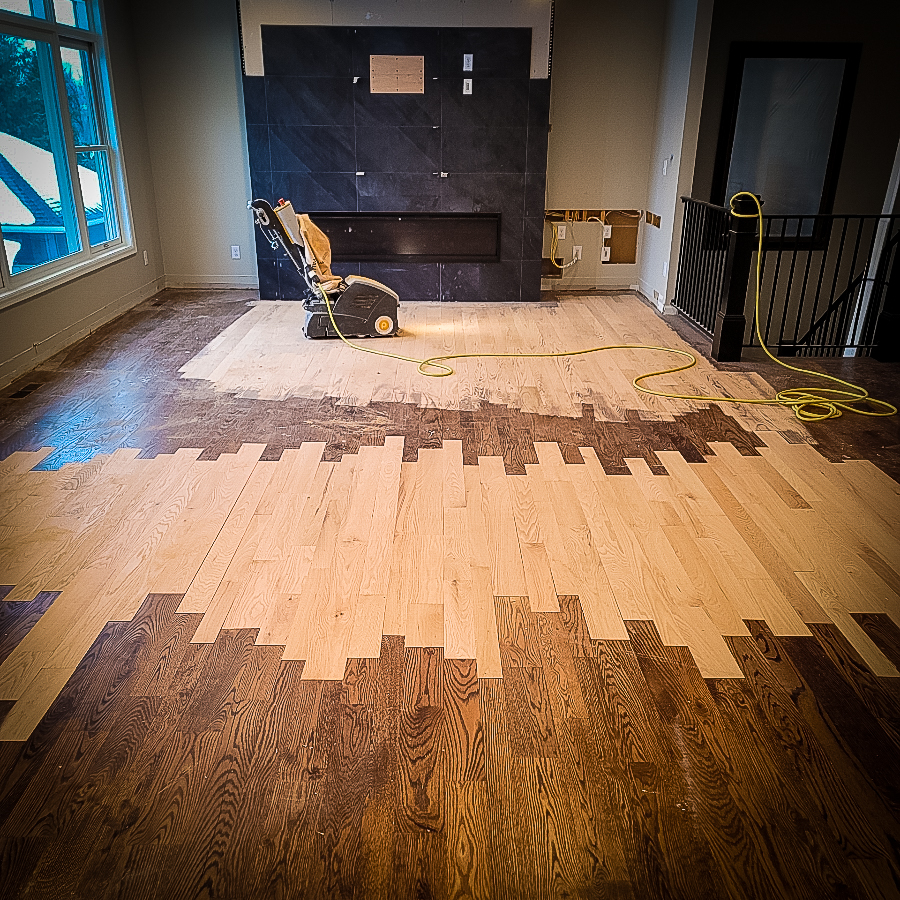
Pull back the carpet in an older Wilmington home and there's a good chance you'll find oak or heart pine that was nailed down before you were born. If your hardwood looks gray, scratched, or dull, you're probably standing on a floor that needs a new finish, while the wood underneath is still perfectly healthy. We sand and refinish hardwood across the Cape Fear region every week, and most of the floors we're asked to replace turn out to be completely savable.
Here's how to tell which side of that line your floor is on, what the work actually involves, and where the money goes.
Try This Before You Call Anyone: The Water Drop Test
Put a few drops of water on the most worn part of your floor and watch what happens.
If the water beads up and sits there, your finish is still doing its job. The scratches and cloudiness you see live in the finish layer, and sanding will remove them completely. If the water soaks in and darkens the wood within a minute or two, the finish has worn through and the bare wood is taking damage every day. That floor needs attention soon — refinishing is still very much on the table, but waiting invites stains that sand out less cleanly.
Ten seconds, no tools, and you already know more about your floor than most people do when they first call us.
How Many Sandings Does Your Floor Have Left?
A standard 3/4-inch solid hardwood plank carries roughly a quarter inch of usable wood above the tongue-and-groove joint. Each full sanding removes somewhere between 1/32 and 1/16 of an inch. Do the math and a solid oak floor can typically survive four to six full refinishes over its life — which is why hundred-year-old floors downtown are often on their third finish and still going.
You can check your own floor's remaining thickness at a floor vent. Lift the register and look at the exposed plank edge: if there's still healthy wood above the tongue, you have sandings left. If past crews have taken it down close to the tongue, or you can see nail heads surfacing across the room, the floor is near the end of its sanding life.
Engineered hardwood plays by different rules. Its real-wood top layer ranges from under a millimeter to 6 mm depending on the product. A wear layer of 2 mm or more can usually take one careful professional sanding. Thinner than that, and sanding would cut through to the core — we'll measure before making any promises.
The Middle Option Nobody Tells You About: Screen and Recoat
Not every tired floor needs the full treatment. If your finish is dull and lightly scratched but hasn't worn through — the water still beads — a screen and recoat may be all you need. We abrade just the existing finish with a fine screening pad, then lay down a fresh topcoat.
It costs a fraction of a full refinish, finishes in a day, and buys your floor years. The catch: it can't change your stain color, and it can't fix scratches that reach the wood. Ask about it honestly — we'd rather sell you the right service than the big one. It's one of several flooring services we run with our own team, so you get one crew and one answer.
What a Full Refinish Involves, Step by Step
A proper refinish is a controlled sequence, and skipping steps is how floors end up with swirl marks and blotchy stain. Here's the order we work in:
Coarse cut (36–40 grit): The big drum sander takes the floor down to bare, flat wood, erasing the old finish, sun fade, and most damage in one pass direction with the grain.
Medium and fine passes (60, then 80–100 grit): Each pass removes the scratch pattern of the one before it. Rushing this is the number one cause of visible sanding marks after staining.
Edging and detail work: Separate machines handle the perimeter, corners, and closets so the whole floor reads as one surface.
Board repairs: Deep pet stains, splits, or old termite damage get individual boards replaced and woven in before finishing, so repairs disappear.
Stain (optional): Bare wood is your reset button. A red oak floor can go pale Scandinavian, warm honey, or deep espresso — this is the moment your floor changes personality.
Two to three coats of finish: With light abrading between coats for adhesion.
Our hardwood sand & finish service runs on dust-controlled equipment that captures dust at the machine. You'll still do some wipe-down afterward — anyone who promises zero dust is overselling — but the days of a house coated in flour are over.
Choosing Your Finish: Oil vs. Water-Based
You'll pick between two finish families, and the choice changes how your floor looks and how soon you're back on it.
Oil-based polyurethane ambers over time, deepening oak into that warm, traditional glow. It's forgiving and durable, with stronger odor during curing and slower recoat times. Water-based polyurethane stays clear — the right call if you're going for pale, coastal tones that shouldn't yellow — dries faster, and smells far less while it cures. Sheen is a separate choice: matte and satin hide sand scratches and paw traffic dramatically better than gloss, which is why we steer most coastal households away from shiny floors.
Plan on walking the floor in socks after about 24 hours, moving furniture back in after several days, and keeping rugs off for around two weeks while the finish fully cures.
When Replacement Is the Honest Answer
We sell new hardwood, so take this from a company with no reason to talk you out of it: refinishing wins whenever the floor is structurally sound. It costs a fraction of new hardwood installed, and the old-growth lumber in many Wilmington and Southport homes is denser and more stable than most new material you can buy.
Replacement becomes the right call in a few specific situations:
Moisture has changed the wood's shape. Cupping (edges higher than centers) sometimes flattens back out once the moisture source is fixed, and can then be sanded. Buckling — boards lifting off the subfloor — usually can't. After storm flooding, our guide on when to replace floors after a Cape Fear flood walks through the difference between discolored and destroyed.
The wood is sanded out. Nail heads showing, tongues exposed at vents, or an engineered wear layer too thin to cut.
You wanted a different floor anyway. Paying to refinish a floor you've never liked is money spent keeping something you didn't want. Compare solid and engineered options in our hardwood collection before you decide.
What Refinishing Costs Around Wilmington
Square footage drives the base price, but three things move it from there: board repairs (each replaced plank adds labor and material), stain work (a natural finish is faster than a custom color with samples), and furniture handling if you'd like us to move rooms for you.
A typical main-level project of around 500 square feet runs three to five days from first sanding pass to final coat, depending on stain and cure times. Your quote comes from a free in-home assessment where we check thickness, moisture, and repairs board by board — an itemized number with no gimmick pricing, which has been our policy since 1999.
Why Coastal Floors Deserve a Local Crew
Humidity is the variable that separates refinishing here from refinishing in Raleigh. Wood in our region wants to hold more moisture in August than in January, and finish applied to a floor that's too wet will trap that moisture and fail early. We check the wood's moisture content before sanding — bare flooring should read in the 6 to 9 percent range before finish goes down — and we schedule coats around what our meters say instead of the calendar.
The wood itself has local character too. Heart pine in Wilmington's older neighborhoods sands and stains differently than oak — it's resinous, it darkens richly, and it rewards a crew that has finished a lot of it. Southport's in-town cottages, Burgaw's farmhouses, and the brick ranches of Leland and Ogden all hide floors like these under carpet. You can see how they turn out in our project gallery.
Find Out What's Under That Old Finish
Run the water drop test, peek under a floor vent, and then let us put real eyes on it. Request your free estimate or call (910) 362-9700, and you'll get a straight answer: screen and recoat, full refinish, or replacement — whichever your floor actually needs. We've been giving Wilmington, Leland, Hampstead, Southport, and Burgaw that answer since 1999.


