

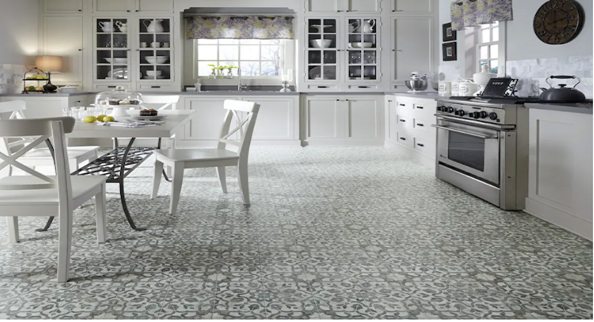
You mop the kitchen after dinner, only to find damp grout lines and swollen baseboards a few months later. Or you step out of the shower and watch water creep toward a seam that never quite sealed right. In our coastal humidity, kitchens and bathrooms work hard every single day, and the wrong floor shows wear fast.
Vinyl sheet flooring solves a lot of those pain points, especially in a humid, storm-prone area like the Cape Fear Region.
Why Humidity Makes Kitchen and Bath Floors Fail
Before choosing a material, it helps to understand what your floors are up against here.
Our climate pushes moisture at flooring from three directions:
- From above: spills, splashes, steam, tracked-in rain, and sandy bath mats that never fully dry
- From below: moisture vapor rising through slab foundations, especially in older homes and additions
- From the air: high humidity that lingers, even when surfaces look dry
Traditional seams and grout lines give that moisture a place to sit. Over time you see curling edges, stained grout, soft spots around sinks, and buckling near exterior doors. In a kitchen or bath, the ideal surface is as close to continuous and non-porous as possible—exactly where vinyl sheet shines.
What Makes Vinyl Sheet a Smart Choice for Wet Rooms
Vinyl sheet flooring is installed in large rolls, which means far fewer seams than tile or individual planks. In many bathrooms and smaller kitchens, you can cover the entire floor with a single piece. That matters in several ways:
- Excellent water resistance: The wear layer and core are made from waterproof materials, so splashes and standing puddles don’t soak in.
- Fewer moisture pathways: With minimal seams, there are fewer weak points for water to sneak under the surface.
- Comfort underfoot: Many modern lines, like Armstrong CushionStep and Mohawk VersaTech, add a cushioned backing that feels softer and slightly warmer than ceramic tile.
- Easy cleaning: A smooth, continuous surface makes it simple to wipe up sand, pet hair, and cooking spills without scrubbing grout.
If you want to see how many looks are available—from stone styles to classic tile patterns—it’s worth browsing the full vinyl sheet selection that Carpet Smart carries from Armstrong, Congoleum, Mohawk, and Shaw.
Design Options That Don’t Look “Builder Basic”
Older sheet vinyl had a reputation for looking flat and plastic. Today’s products are far more design-forward, which matters if you’re updating a Carolina Beach rental or refreshing a primary bath you use every day.
You’ll find:
- Wood visuals that pair well with white shaker cabinets or coastal blues
- Stone and slate looks that mimic natural materials without the maintenance
- Classic hex, basketweave, and checkerboard patterns for historic or cottage-style homes
- Subtle textures that add grip without becoming hard to clean
If you’re planning to carry a wood look from nearby living spaces into the kitchen, you might compare those patterns with the luxury vinyl collection, which offers plank formats for adjoining rooms. Coordinating across materials helps open up smaller homes and townhouses visually.
When you’re not sure what works with your cabinets or fixtures, tools like Carpet Smart’s design inspiration galleries make it easier to picture options in a real room.
Comparing Vinyl Sheet to Other Popular Kitchen and Bath Floors
Homeowners often ask how vinyl sheet stacks up against tile, laminate, or LVP in humid spaces.
- Versus ceramic/porcelain tile: Tile is extremely durable, but grout lines stain and require sealing. Tile also feels cold and hard underfoot, which can be tough in bathrooms used by kids or older adults. Vinyl sheet offers a warmer, more forgiving surface with much less maintenance.
- Versus laminate: Many laminates are marketed as water-resistant, but they still rely on a wood-based core. In a bathroom with daily steam or a kitchen with frequent spills, vinyl sheet simply handles standing water better over time. For less wet spaces, you can still explore style-driven options in the laminate catalog and keep sheet vinyl for the true splash zones.
- Versus LVP (luxury vinyl plank): LVP is also waterproof and excellent for open-plan spaces, but it has more seams than sheet goods. In a small bath where you’re worried about water sitting around a tub or shower, sheet vinyl often gives you extra peace of mind.
For families in Hampstead or Leland juggling sandy feet, pets, and constant kitchen traffic, that balance of water resistance, comfort, and easy cleanup is what makes sheet vinyl so compelling.
Getting the Most from Your New Floor
The material is only half of the equation; proper installation and realistic expectations do the rest.
A few key points:
- Subfloor prep matters. Vinyl sheet is flexible, so lumps or ridges telegraph through over time. Leveling and smoothing beforehand pays off in a cleaner finish.
- Seams and edges are critical. Around tubs, showers, and exterior doors, tight seams and properly sealed transitions keep water on the surface where it belongs.
- Simple care is best. Regular sweeping and gentle mopping protect the wear layer and keep sand from acting like sandpaper.
If you’re curious how other homeowners in the Cape Fear Region feel about their projects, you can read recent customer reviews that mention real-world performance and installation quality.
Ready to Upgrade Your Kitchen or Bath?
Whether you’re renovating after a leak or planning a full remodel, vinyl sheet flooring offers a practical, good-looking way to protect kitchens and bathrooms from our coastal humidity. When you’re ready to compare styles, talk through subfloor conditions, or coordinate with other materials in your home, you can schedule your free in-home consultation with Carpet Smart and get tailored advice for your space.


