

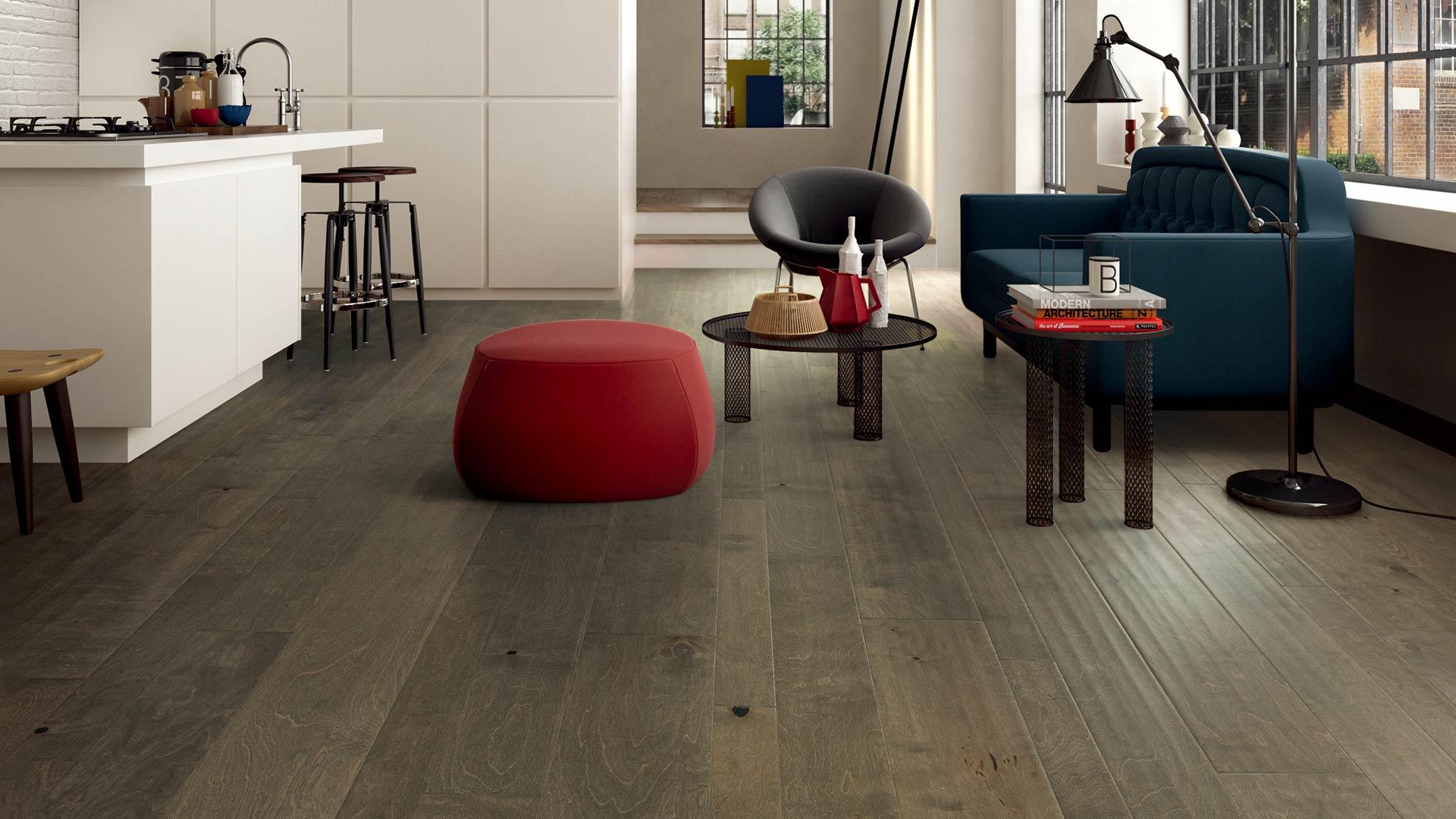
If you live near the coast, you already know your home fights moisture year-round. Summer air feels thick, AC runs nonstop, and any door left open invites in sticky humidity. When you’re choosing new floors for a home in places like Hampstead or Leland, the question isn’t just “What looks best?” It’s “What’s going to stay flat, stable, and beautiful when the air feels like a wet towel?”
Let’s break down how laminate and hardwood really behave in our climate, so you can match the look you love with the performance you need.
How Humidity Affects Hardwood vs. Laminate
Both materials are built from wood in different ways, and that’s why they react differently to moisture.
Traditional hardwood is solid wood from top to bottom. Wood naturally swells as humidity rises and shrinks when the air dries out. In a humid subtropical climate, that movement can show up as:
- Gaps in winter, cupping or buckling in summer if the home isn’t well controlled for temperature and humidity.
Laminate uses a dense fiberboard core topped with a printed image and a tough wear layer. It can still react to moisture, but the construction is more stable. Many modern collections are specifically engineered to resist spills and everyday moisture much better than solid wood.
In homes with slab foundations or crawlspaces that tend to stay damp, that extra stability matters. It’s one reason more Cape Fear homeowners start their search in our laminate catalog when humidity is a major concern.
Where Laminate Has the Edge in Coastal Homes
If your main worry is everyday moisture, laminate often wins on practicality.
Water-resistant and waterproof lines—like many of the Mohawk RevWood and similar products we carry—are designed to handle:
- Short-term spills and pet accidents
- Wet shoes by the door after a storm
- Higher ambient humidity without obvious swelling when installed correctly
Because the pattern is printed and protected by a durable top layer, you don’t have to refinish it, and surface wear from sand and grit is less noticeable than on a softer wood species. That makes laminate a strong option for busy households, rentals, and spaces where doors are constantly opening to porches or garages.
If you’re exploring options for those high-traffic rooms, it helps to compare colors and plank widths across our full laminate selection to see how many waterproof styles now mimic real wood.
Where Hardwood Still Makes Sense in a Humid Climate
Solid or engineered hardwood remains the gold standard for character and long-term value, but it asks more from the home and the homeowner.
To keep wood floors happy here, you’ll want:
- Consistent air conditioning and, ideally, a dehumidifier
- Careful attention to acclimation before installation
- A realistic expectation that some seasonal movement is normal
Engineered hardwood—built with a hardwood top layer over a stable core—handles humidity swings better than traditional solid planks, especially over concrete. For homeowners who want the real wood feel underfoot and are willing to maintain a more controlled indoor environment, engineered products from our hardwood collection can be a smart compromise.
The payoff is that hardwood can be refinished down the road, which appeals if you plan to stay in the home long term and want a floor that can be renewed rather than replaced.
Choosing the Right Floor for Your Space
The best choice is rarely “hardwood everywhere” or “laminate everywhere.” It’s about matching material to room conditions.
In rooms where moisture and tracked-in grit are part of daily life—entry halls from the garage, open-plan living rooms off a back deck, or family spaces in coastal cottages—water-resistant laminate often delivers the best balance of look and durability. You can still reserve real wood for more controlled areas like formal dining rooms or upstairs bedrooms if that’s your priority.
If you’re still weighing options, it can help to see how different looks play together. Many homeowners like to browse our design inspiration galleries first, then narrow down specific species or colors from the hardwood catalog or laminate lines that catch their eye.
Ready to Talk Through Your Humidity Challenges?
Every house is a little different—crawlspace conditions, HVAC habits, and even how often doors stay open all matter. If you’d like a local flooring expert to look at your rooms, explain tradeoffs, and bring samples to you, you can schedule your free in-home consultation and we’ll help you choose the right mix of laminate and hardwood for your space.


